Most diligence findings confirm what the buyer already believed. A few change the deal: the price, the conditions to closing, the protections in the purchase agreement, or the integration plan. Corporate development teams know which kinds those are. The hard part is getting them to the negotiating table early, with the evidence attached, rather than in the last week as a paragraph in a memo.
This walk-through follows a made-up software acquisition and the five findings that mattered.
The deal
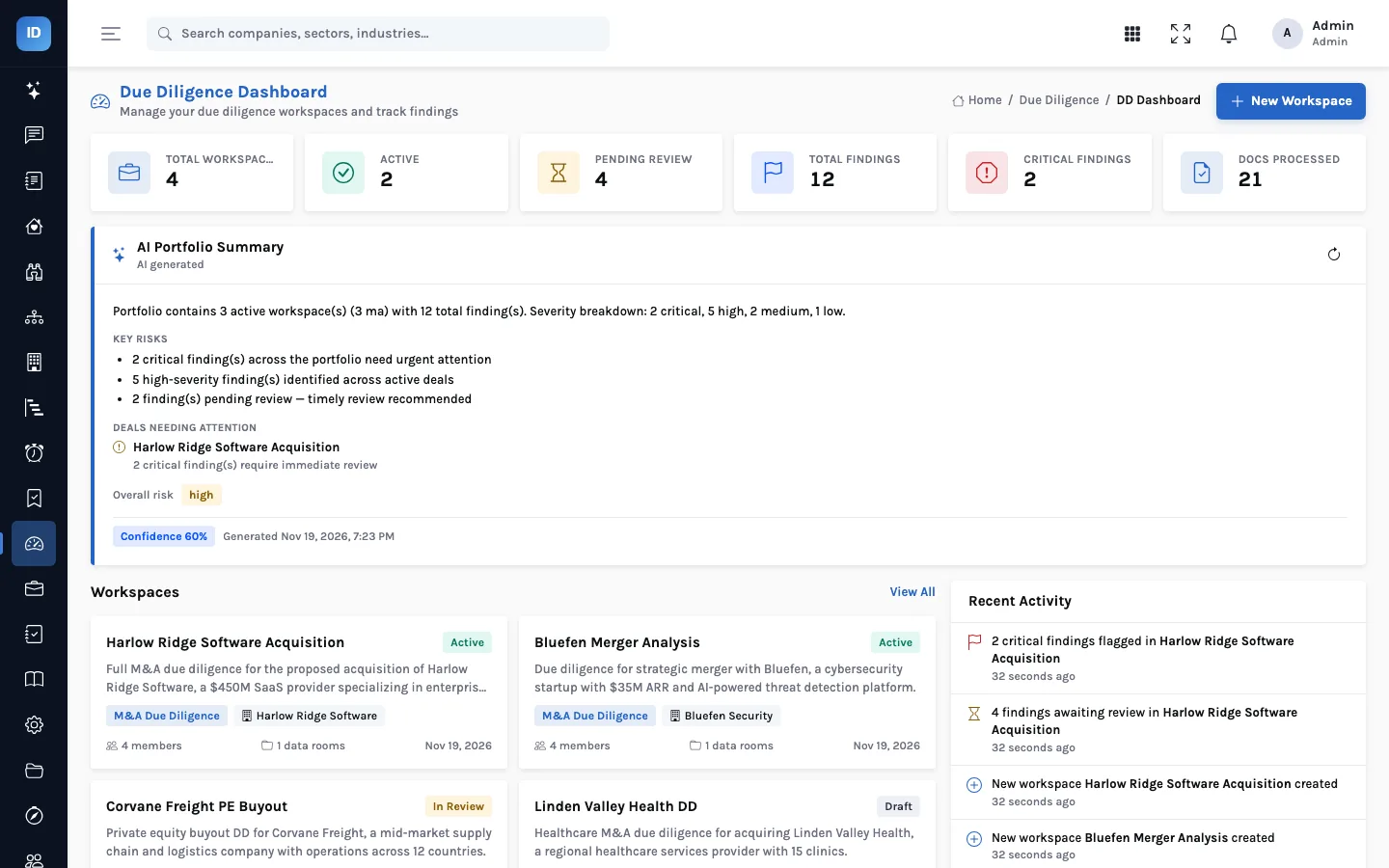
A fictional ERP software company is acquiring Harlow Ridge Software, a made-up provider with reported revenue of $120M. The workspace uses the M&A playbook, and the data room holds the annual report, quarterly financials, the master services agreement, the IP portfolio summary, a litigation summary, the org chart and the technology architecture, each filed under a category.
Five findings, and where each one lands
1. Quality of earnings: a red flag on the multiple
The financial review finds $8.2M of non-recurring items in reported EBITDA: a one-time perpetual licence, deferred revenue recognised early after contract changes, and an insurance settlement. Adjusted EBITDA is about $14.6M against $22.8M reported. The finding is critical and a red flag, cited to the annual report and the quarterly financials.
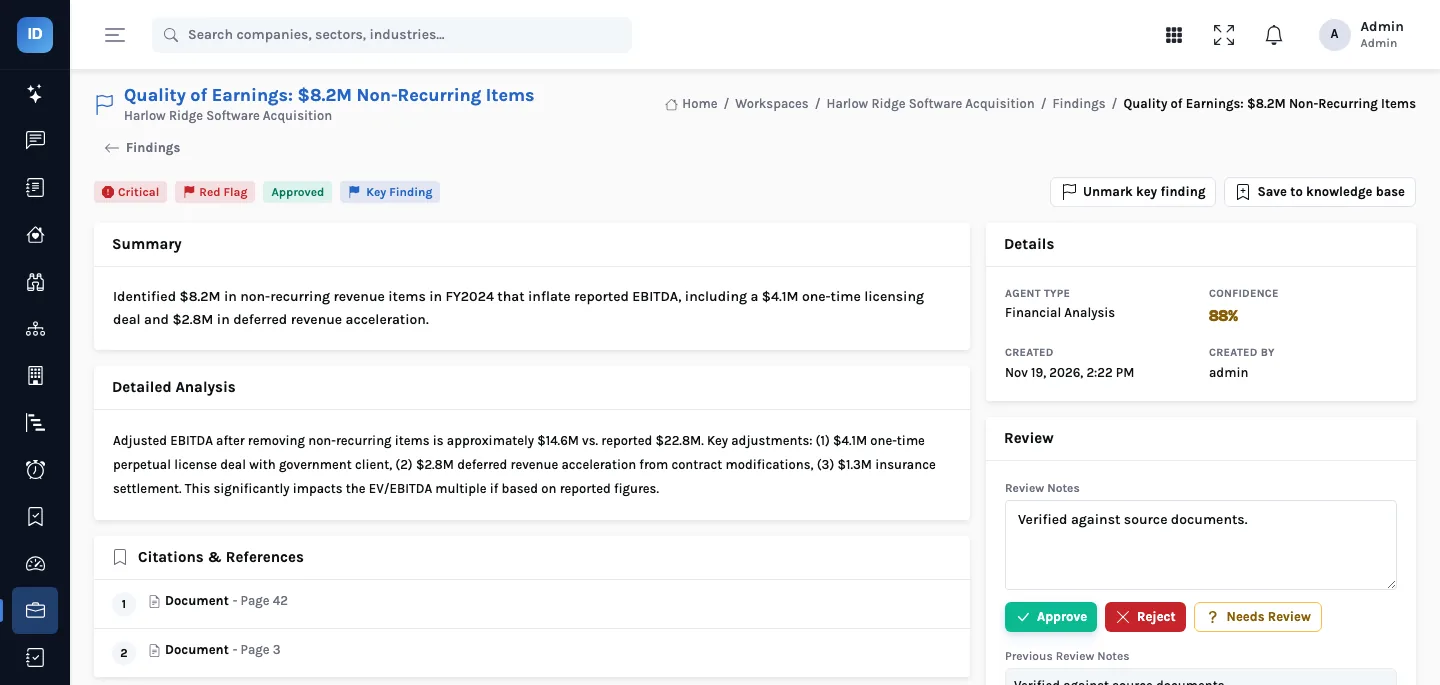
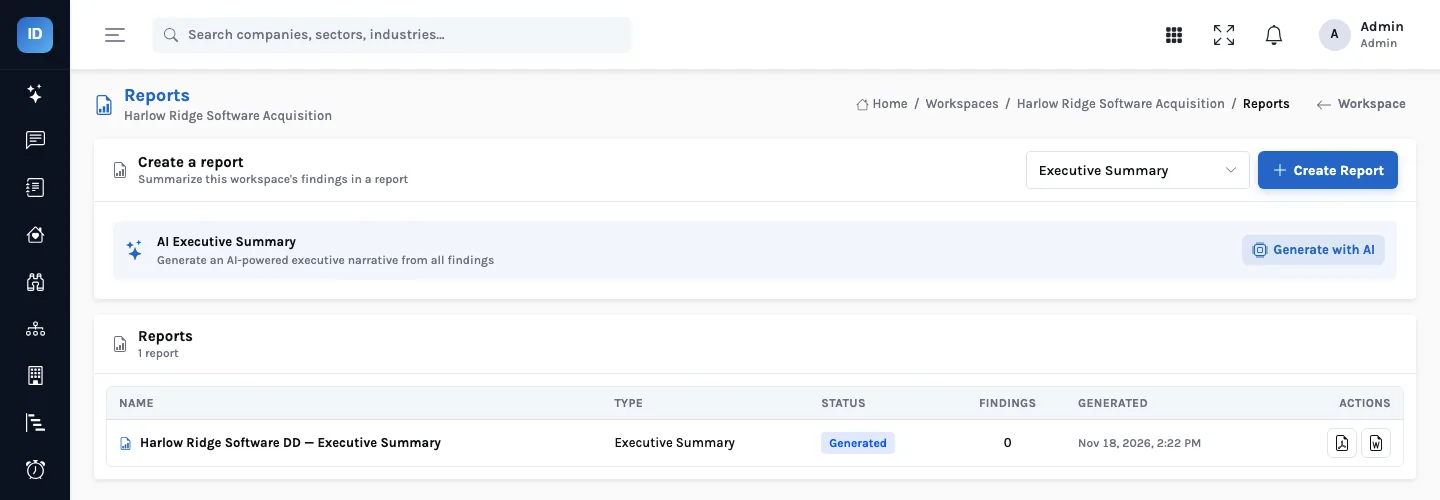
Because it is approved and marked a key finding, it leads the executive summary of the report. More usefully, it goes to the valuation conversation with its citations: the seller's advisers can check the same pages.
2. Change-of-control consents: a condition, not a footnote
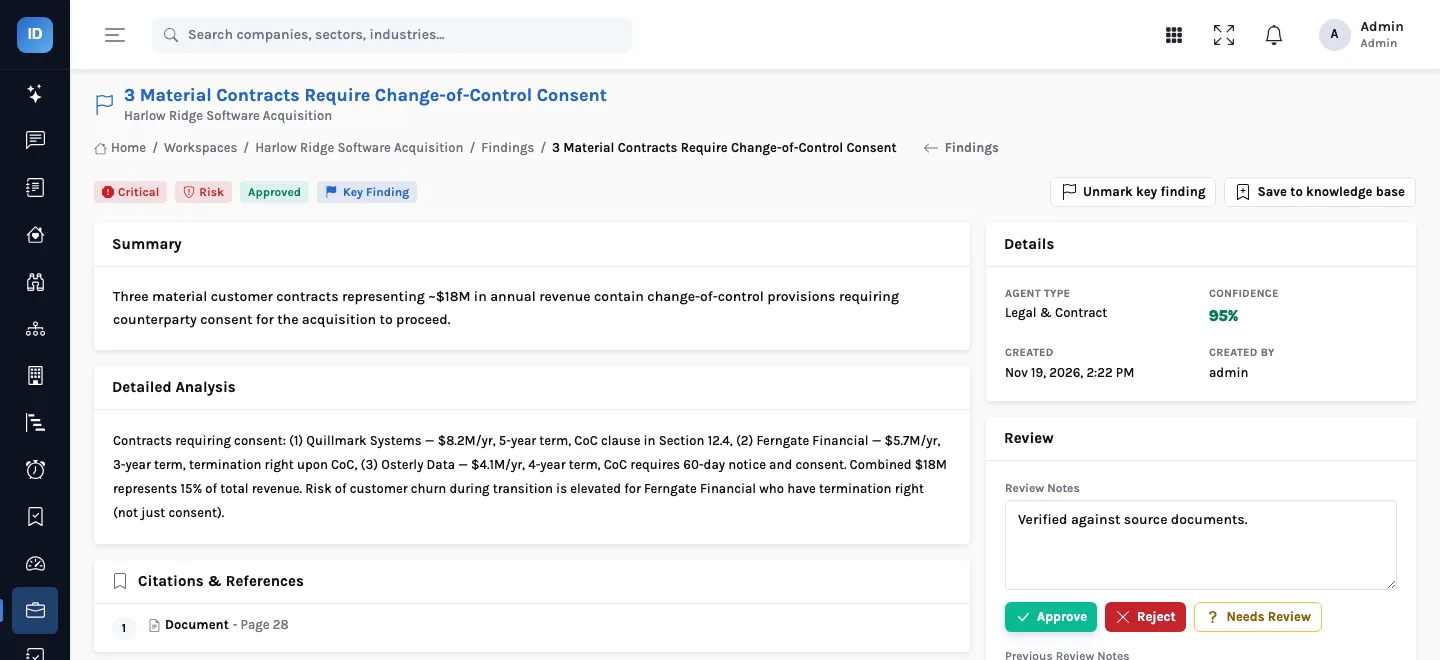
Three customer contracts worth about $18M a year need the customer's consent on a change of control, and one gives the customer a right to terminate. The finding is critical, cited to the clause, and tagged so the legal tab collects it with the other contract findings.
3 to 5. Litigation, key people, technical debt
- Pending litigation: a patent infringement claim, high severity, marked needs review: the claimed damages are not an estimate of likely exposure, and the insurance policies have not been read yet.
- Key people: the CTO and the VP of Engineering are single points of failure for the core platform. High, also marked needs review, and a people question for the integration team as much as a deal one.
- Technical debt: roughly 30% of the code base is legacy modules with outdated dependencies. High; pending review until the technology lead has read the architecture deck.
Why the review status matters at the table
Negotiation is where an unreviewed claim does damage. A number the seller can disprove costs the buyer credibility on every other point. In InsightDDx the report is built from approved findings only, and the key findings, the ones a deal team would take to the table, are chosen from those. The three findings above that are still pending or sent back will not reach the report until they are approved.
From finding to term sheet in one afternoon
The fictional buyer's head of corporate development opens the findings list, filters to critical, and has the two findings that will reshape the offer: the earnings adjustment and the consents. She exports the report, which leads with both, and sends the cited pages to the buyer's counsel and the valuation team the same afternoon. The three open findings stay on the workspace with their owners and notes. Nothing in the pack rests on a claim nobody has checked.
Timing: the earlier a term-changing finding lands, the cheaper it is
A price adjustment raised in the first two weeks is a valuation conversation. The same adjustment raised the week before signing is a renegotiation, and it costs goodwill the integration will need later. Three habits move findings forward:
- Review red flags the day they are recorded. Filter the findings list by category red flag and review status pending each morning; a red flag waiting a week is a week of negotiating leverage gone.
- Start the term-changing items first, not in order. In the M&A template the change-of-control question is critical and the quality of earnings question is high; both should be in progress in week one, whatever their position in the list.
- Send back early, with a precise ask. “Needs review: read the insurance policies” gets an answer in two days; “needs more work” does not.
Writing the finding so the other side can check it
A finding that will be quoted to the seller has a different reader from one that stays internal. Before it goes to the table, the deal lead checks three things on the finding page:
- The citation is to the page and the passage, not the document. The seller's advisers will look it up.
- The summary separates fact from judgement. “$8.2M of items are non-recurring” is the fact; “the multiple should apply to adjusted EBITDA” is the position. Keep both, labelled.
- The reviewer's note says what was checked, so the person negotiating knows how firm the ground is.
Questions corp dev teams ask
Can we keep a finding out of the report without rejecting it?
Yes. A report can be limited to a chosen list of findings when it is created through the API; without that list it takes every approved finding. Rejecting a finding to hide it would lose the record of why it was raised.
Does a finding's confidence feed the report?
The report carries each approved finding as recorded, including its confidence, but selection is by review status. A low-confidence finding that a reviewer approved is in; a high-confidence one still pending is not.
What to set up on your next deal
- Use the red flag category for findings that would change price or structure; filter by it before every steering call.
- Make key finding a deliberate decision by the deal lead, not a default, so the executive summary stays short.
- Ask for a citation on every critical finding. A critical finding without one is the first thing to send back.
- Save the findings worth remembering (a consent pattern, an earnings adjustment type) to the knowledge base as lessons learned for the next deal.