Due diligence is not only for acquisitions. Every time a regulated company hands a critical function to an outside provider (claims processing, payments, hosting, customer support) it needs the same kind of structured review: a checklist, documents, findings with evidence, a decision, and a record that an auditor or supervisor can read later. InsightDDx runs that review in the same kind of workspace, with the vendor / third-party domain type.
The Vendor Risk Assessment playbook
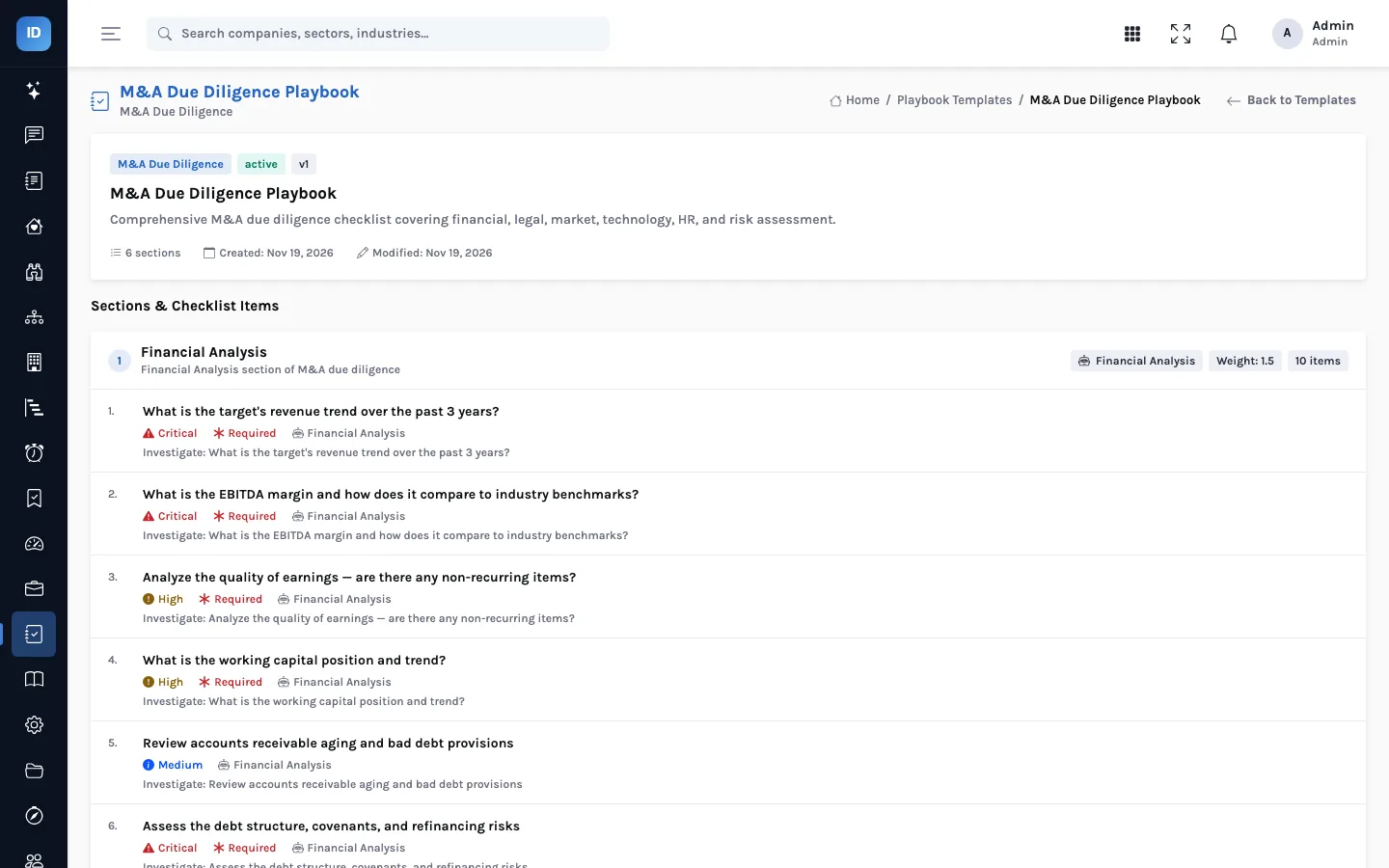
The template has five sections and twenty items. Each section has a weight, so the parts of a vendor review that decide the outcome (security and data privacy, for most critical vendors) count for more than the parts that inform it.
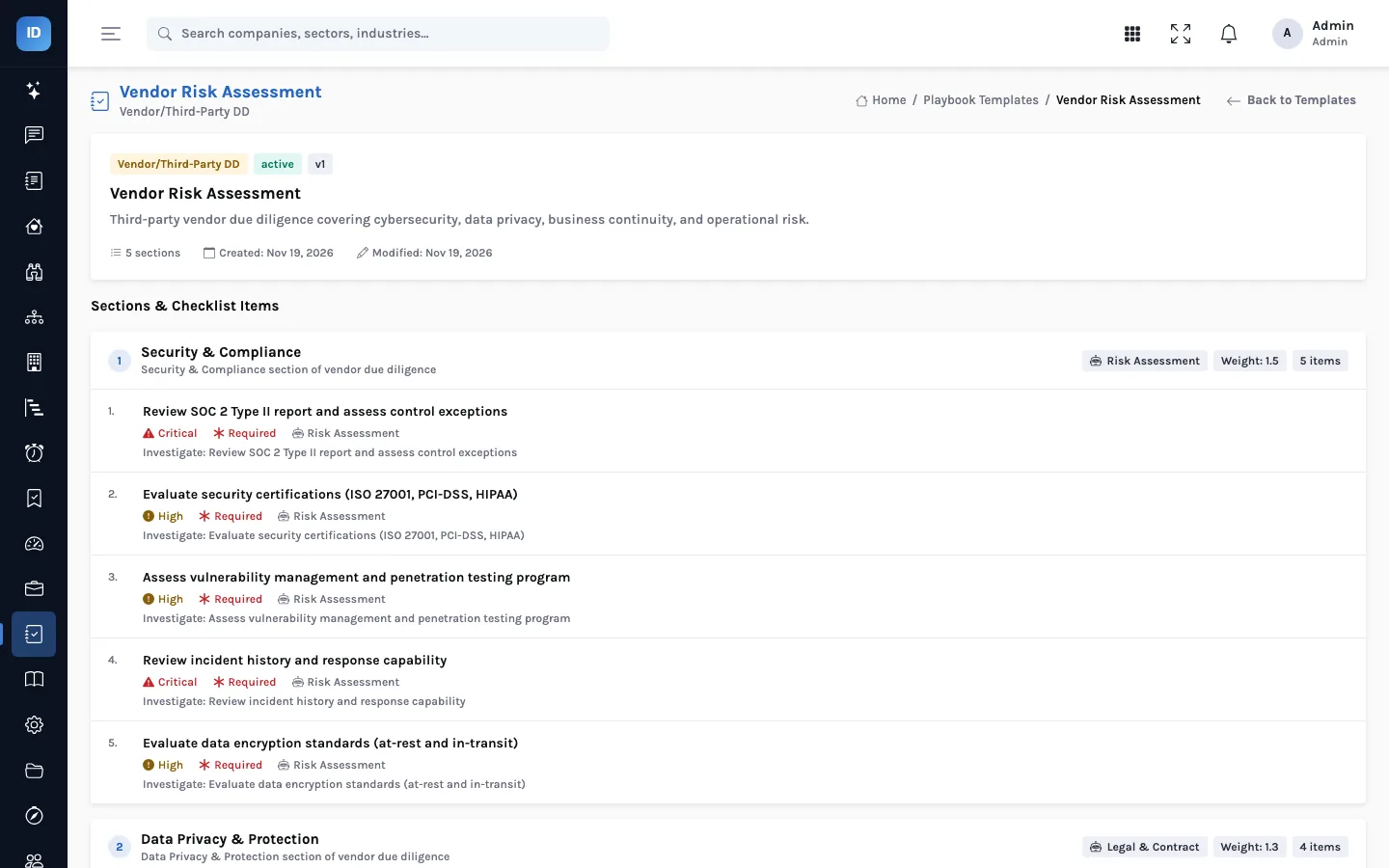
The questions are the ones a third-party risk team already asks:
- Security & Compliance: the SOC 2 Type II report and its control exceptions, certifications such as ISO 27001, PCI DSS and HIPAA where relevant, vulnerability management and penetration testing, incident history, encryption at rest and in transit.
- Data Privacy & Protection: data processing agreements, GDPR and CCPA compliance and cross-border transfers, retention and deletion, subprocessors and fourth-party risk.
- Business Continuity & Resilience: the continuity and recovery plan, RTO and RPO targets checked against test results, geographic redundancy, SLA terms and penalties.
- Financial Stability: financial statements and trends, cash runway and debt, customer concentration.
- Contractual & Legal Review: termination and exit rights, liability caps and indemnities, data portability and transition help, change of control and assignment.
A worked example
Onboarding a claims-processing vendor
A fictional regional property insurer plans to outsource first notice of loss to Tallow Point Claims, a made-up claims-processing provider. The vendor management lead opens a vendor workspace, instantiates the Vendor Risk Assessment playbook, and adds the team: herself as owner, an analyst from IT risk, one from procurement, and the chief information security officer as reviewer.
The vendor's documents go into the data room by category: the SOC 2 report and penetration test summary as technical, the draft contract and data processing agreement as legal, two years of financial statements as financial, the continuity plan and last test report as regulatory.
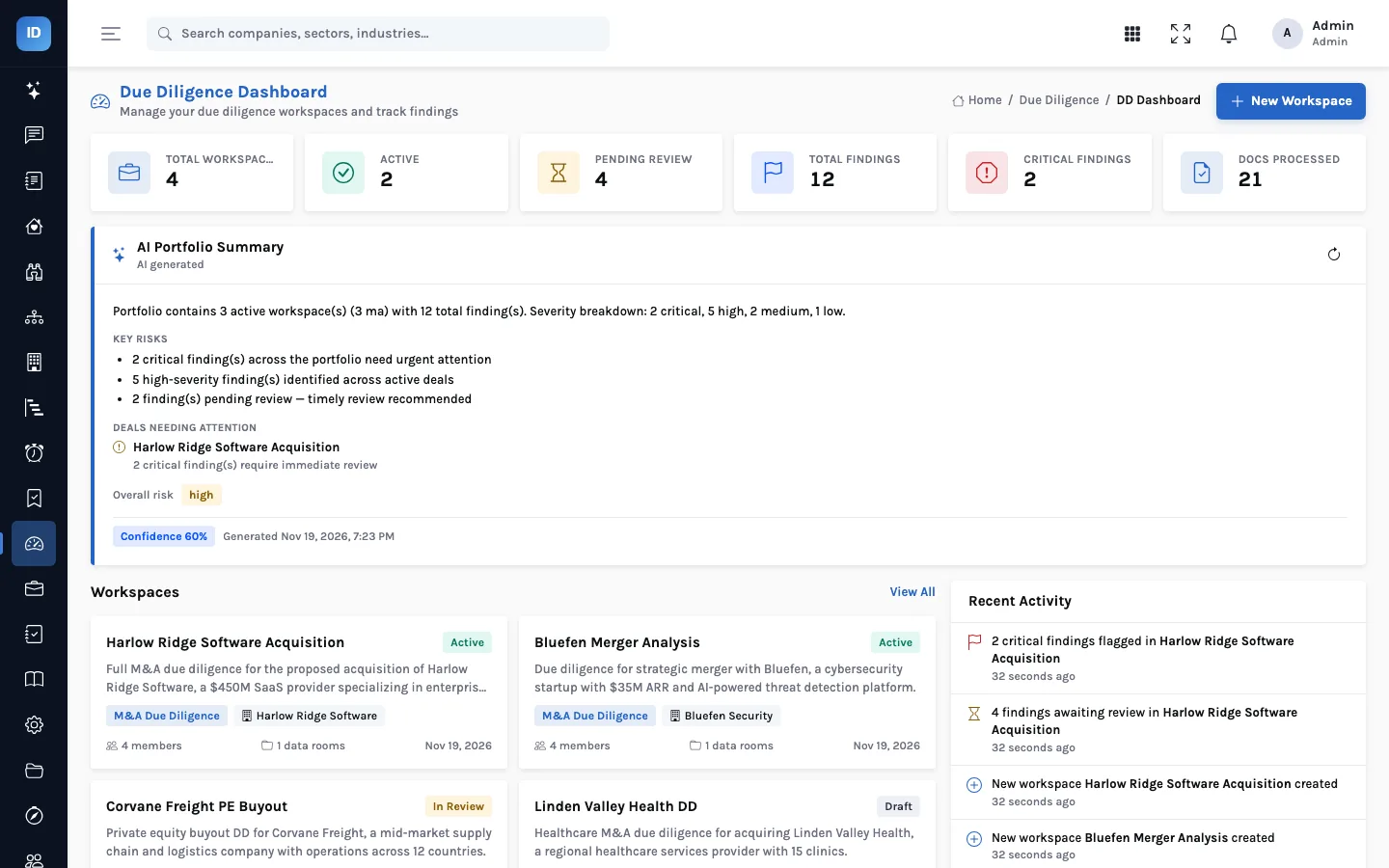
Three findings matter. The SOC 2 report has a control exception in access reviews (high, risk, cited to the exceptions page). The continuity test met the recovery time target but not the recovery point target (high, risk). The draft contract has no right to audit subprocessors (medium, compliance). The CISO approves the first two and sends the third back: the data processing agreement may cover it. It does, so the analyst updates the finding with the clause cited and it is approved as an observation.
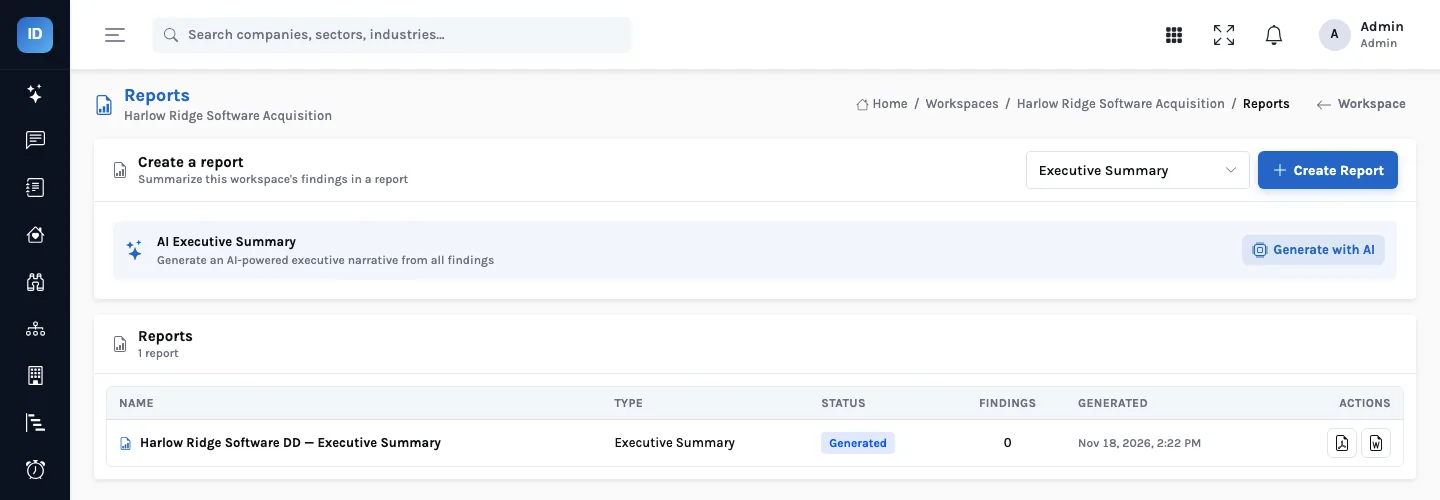
The report goes to the outsourcing committee with the two high findings in its risk register, and the insurer's conditions (a remediation date for the access reviews, a retest of recovery) become schedule items in the contract.
The knowledge base: what the last review taught you
Third-party risk is repetitive in a useful way: the same kinds of gap come up with vendor after vendor. The knowledge base holds checklists, templates, guidelines, best practices, regulatory notes, references and lessons learned, each with tags and a count of how often it has been used. Some entries are global; others come from a workspace, because any finding can be saved to the knowledge base as a lesson learned.
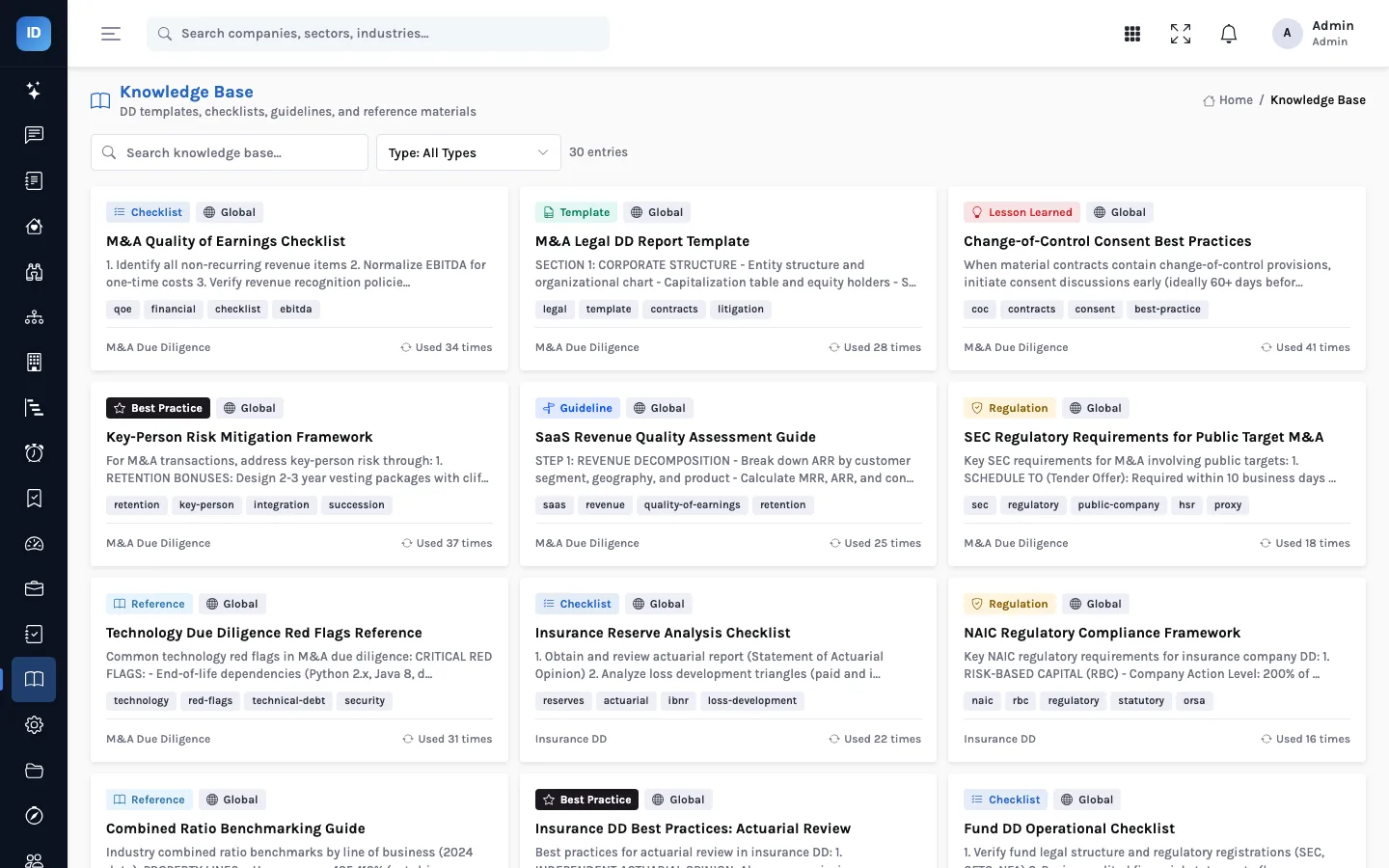
In the example, the vendor lead saves the subprocessor finding, with the clause that resolved it, so the next review of a vendor with the same contract structure starts with the answer.
Not every vendor needs all twenty items
Third-party risk teams usually tier vendors by how critical the service is and how much data it touches, and scale the review to the tier. The playbook supports that without a second template:
| Tier (your definition) | How to use the playbook |
|---|---|
| Critical: core process, sensitive data | All five sections. Every critical and high item answered with a finding and a citation. |
| Important: limited data or a replaceable service | Security, privacy and contract sections in full; skip continuity items that do not apply, with a reason in the workspace description. |
| Low: no data access, low spend | Usually not a workspace at all. If it is, skip all but the contract and financial items. |
Skipped items count as done and stay visible, so a reviewer can see that a lighter review was a decision. If your tiers are stable, a team can keep a template per tier, added through the API.
Reassessment next year
When the vendor comes up for review again, start a new workspace for the new cycle rather than reopening the old one: last year's findings and notes stay intact as the baseline, and the new playbook starts from pending. Mark the old workspace completed. The lessons saved to the knowledge base carry across, and the knowledge base search matches on entry titles and content, ranking the most-used entries first.
Choosing the output
A vendor workspace offers four report types: Vendor Scorecard, Vendor Risk Assessment, Compliance Report and Executive Summary. Each is generated from the approved findings, with high and critical findings in the risk register. The outsourcing committee in the example gets the risk assessment; procurement gets the scorecard for the contract file.
Questions vendor-risk teams ask
Can the vendor fill in a questionnaire in InsightDDx?
InsightDDx is built for the reviewing team rather than the vendor: your team files what the vendor sends into the data room and records the findings against your questionnaire's playbook.
Can we use our own control framework?
Yes, as a template with your sections, weights and questions, added through the API or with our team during setup.
Why use a diligence tool for vendors at all?
- The same evidence standard. A vendor finding needs a citation and a reviewer as much as an M&A one does, and the review record is what an examiner asks for.
- Counted progress. “Is the vendor review done?” becomes a question about which required items are open.
- One place per vendor. When the vendor is reassessed next year, the workspace, its findings and their notes are there to start from.
The same applies to the other non-M&A templates: insurance company reviews (reserves, regulatory capital, underwriting, claims), fund reviews (structure and governance, performance, operations), real estate (property, environmental, title and zoning) and healthcare (regulatory, clinical quality, reimbursement).